Be yourself; Everyone else is already taken.
— Oscar Wilde.
This is the first post on my new blog. I’m just getting this new blog going, so stay tuned for more. Subscribe below to get notified when I post new updates.
My greatest motto in life is "keep off the grass"
Be yourself; Everyone else is already taken.
— Oscar Wilde.
This is the first post on my new blog. I’m just getting this new blog going, so stay tuned for more. Subscribe below to get notified when I post new updates.
The guitar is a fretted musical instrument that usually has six strings.[1] It is typically played with both hands by strumming or plucking the strings with either a guitar pick or the finger(s)/fingernails of one hand, while simultaneously fretting (pressing the strings against the frets) with the fingers of the other hand. The sound of the vibrating strings is projected either acoustically, by means of the hollow chamber of the guitar (for an acoustic guitar), or through an electrical amplifier and a speaker.

ACOUSTIC GUITAR
Guitar, plucked stringed musical instrument that probably originated in Spain early in the 16th century, deriving from the guitarra latina, a late-medieval instrument with a waisted body and four strings. The early guitar was narrower and deeper than the modern guitar, with a less pronounced waist. It was closely related to the vihuela, the guitar-shaped instrument played in Spain in place of the lute.
The guitar originally had four courses of strings, three double, the top course single, that ran from a violin-like pegbox to a tension bridge glued to the soundboard, or belly; the bridge thus sustained the direct pull of the strings. In the belly was a circular sound hole, often ornamented with a carved wooden rose. The 16th-century guitar was tuned C–F–A–D′, the tuning of the centre four courses of the lute and of the vihuela.
From the 16th to the 19th century several changes occurred in the instrument. A fifth course of strings was added before 1600; by the late 18th century a sixth course was added. Before 1800 the double courses were replaced by single strings tuned E–A–D–G–B–E′, still the standard tuning.

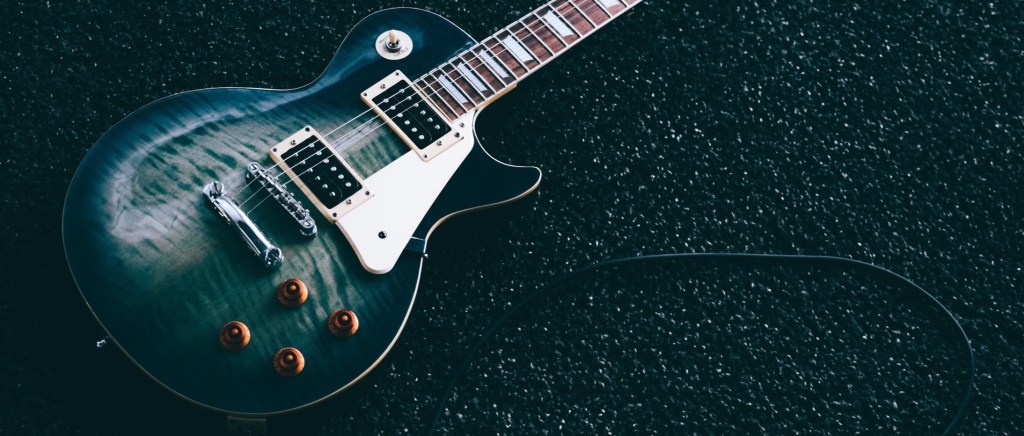
ELECTRIC GUITAR
An electric guitar is a guitar that uses one or more pickups to convert the vibration of its strings into electrical signals. … Invented in 1931, the electric guitar was adopted by jazz guitar players, who wanted to play single-note guitar solos in large big band ensembles.
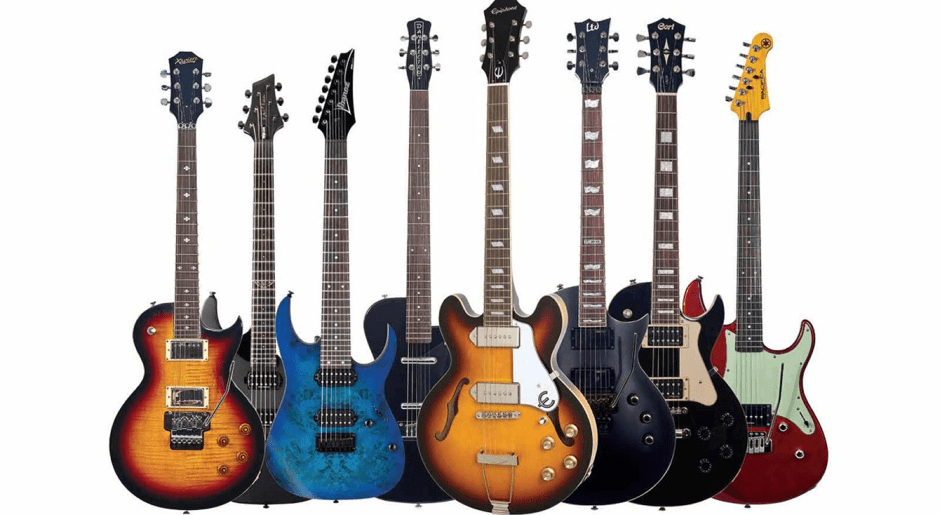
LIST OF EXPENSIVE GUITARS
There are not many collectables in the world that are as cool as guitars. They’re flawless and practical works of art that inspire players and music fans all around the world. I’m sure you’re already acutely aware of the guitar’s signature status as a cultural icon, but beyond good memories of The Beatles or Hendrix at Woodstock, some guitars are investments. Can you guess how much someone is willing to pay for a famous guitar? We’ve compiled a list of the Top 10 Most Expensive Guitars Sold At Auction, Let’s get started!
10. Brownie Stratocaster, Eric Clapton – $450,000
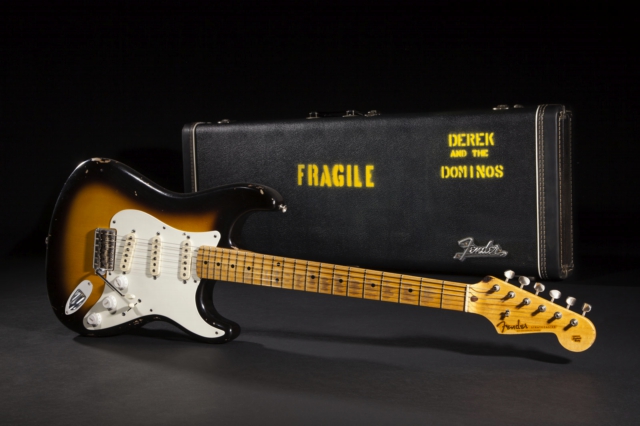
9. Goldleaf Stratocaster, Eric Clapton – $455,000

8. Gibson SG, George Harrison and John Lennon – $570,000

7. Fender Strat, Stevie Ray Vaughan – $623,500

6. 1939 CF Martin, Eric Clapton – $791,500
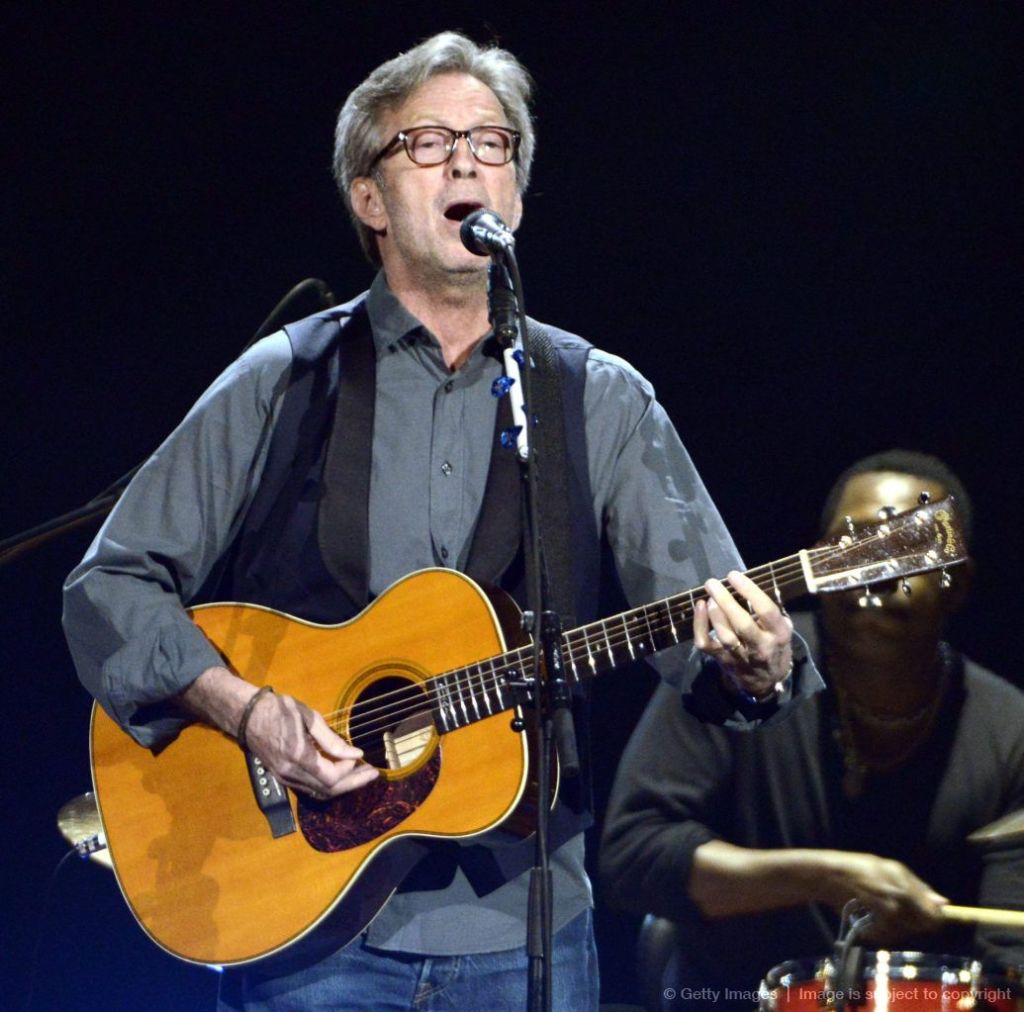
5. 1964 Gibson ES-335, Eric Clapton – $847,500

4. Blackie Strat, Eric Clapton – $959,000

3. Washburn, Bob Marley – valued at 1.2 million

2. 1968 Fender Strat, Jimi Hendrix – $2,000,000


RYAN CAYABYAB

Ryan Cayabyab, also known as Mr. C, is a Filipino musician, composer and conductor. He was the Executive and Artistic Director for several years for the defunct San Miguel Foundation for the Performing Arts. He was named a National Artist of the Philippines in 2018.
OGIE ALCASID

Herminio Jose Lualhati Alcasid Jr., known as Ogie Alcasid is a Filipino singer-songwriter, television presenter, comedian, parodist, and actor. He is also currently the President of OPM.

A music genre is a conventional category that identifies some pieces of music as belonging to a shared tradition or set of conventions. It is to be distinguished from musical form and musical style, although in practice these terms are sometimes used interchangeably.
There are different kinds of music genres:
Rock, also called rock and roll, rock & roll, or rock ’n’ roll, form of popular music that emerged in the 1950s.

It is certainly arguable that by the end of the 20th century rock was the world’s dominant form of popular music. Originating in the United States in the 1950s, it spread to other English-speaking countries and across Europe in the ’60s, and by the ’90s its impact was obvious globally (if in many different local guises). Rock’s commercial importance was by then reflected in the organization of the multinational recording industry, in the sales racks of international record retailers, and in the playlist policies of music radio and television. If other kinds of music—classical, jazz, easy listening, country, folk, etc.—are marketed as minority interests, rock defines the musical mainstream. And so over the last half of the 20th century it became the most inclusive of musical labels—everything can be “rocked”—and in consequence the hardest to define. To answer the question, What is rock?, one first has to understand where it came from and what made it possible. And to understand rock’s cultural significance, one has to understand how it works socially as well as musically.
FAMOUS MUSICIANS
Jazz, musical form, often improvisational, developed by African Americans and influenced by both European harmonic structure and African rhythms. It was developed partially from ragtime and blues and is often characterized by syncopated rhythms, polyphonic ensemble playing, varying degrees of improvisation, often deliberate deviations of pitch, and the use of original timbres.
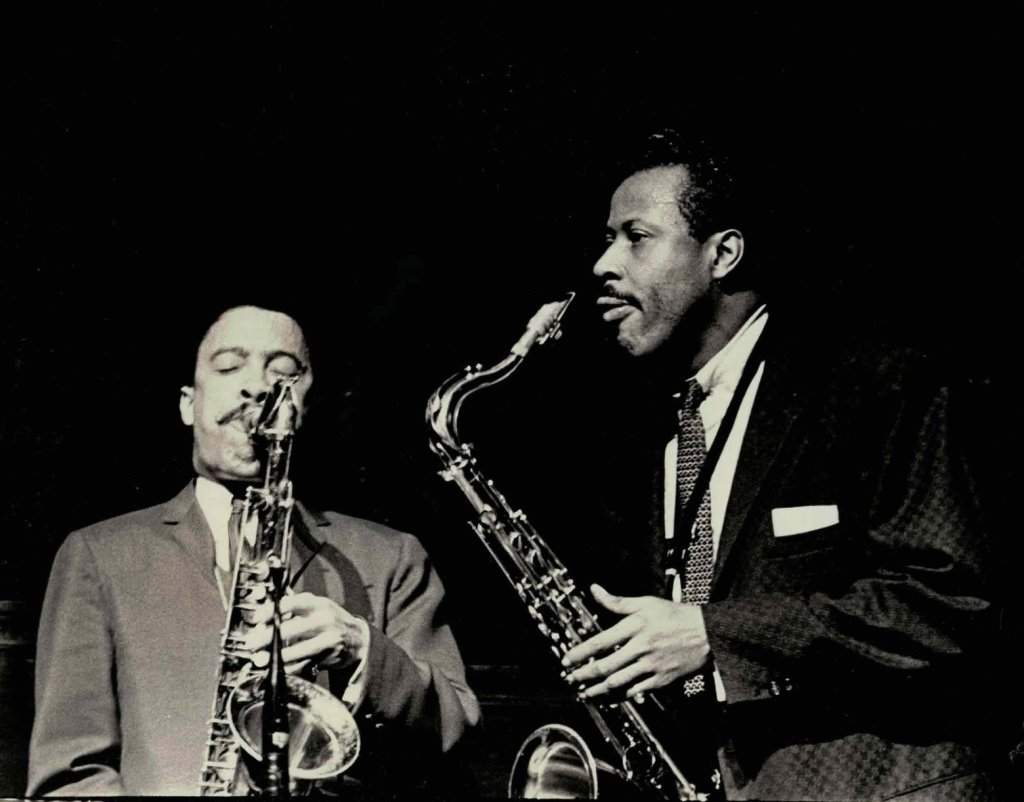
FAMOUS MUSICIANS
This is an example post, originally published as part of Blogging University. Enroll in one of our ten programs, and start your blog right.
You’re going to publish a post today. Don’t worry about how your blog looks. Don’t worry if you haven’t given it a name yet, or you’re feeling overwhelmed. Just click the “New Post” button, and tell us why you’re here.
Why do this?
The post can be short or long, a personal intro to your life or a bloggy mission statement, a manifesto for the future or a simple outline of your the types of things you hope to publish.
To help you get started, here are a few questions:
You’re not locked into any of this; one of the wonderful things about blogs is how they constantly evolve as we learn, grow, and interact with one another — but it’s good to know where and why you started, and articulating your goals may just give you a few other post ideas.
Can’t think how to get started? Just write the first thing that pops into your head. Anne Lamott, author of a book on writing we love, says that you need to give yourself permission to write a “crappy first draft”. Anne makes a great point — just start writing, and worry about editing it later.
When you’re ready to publish, give your post three to five tags that describe your blog’s focus — writing, photography, fiction, parenting, food, cars, movies, sports, whatever. These tags will help others who care about your topics find you in the Reader. Make sure one of the tags is “zerotohero,” so other new bloggers can find you, too.

 Ejan's Music Blog